

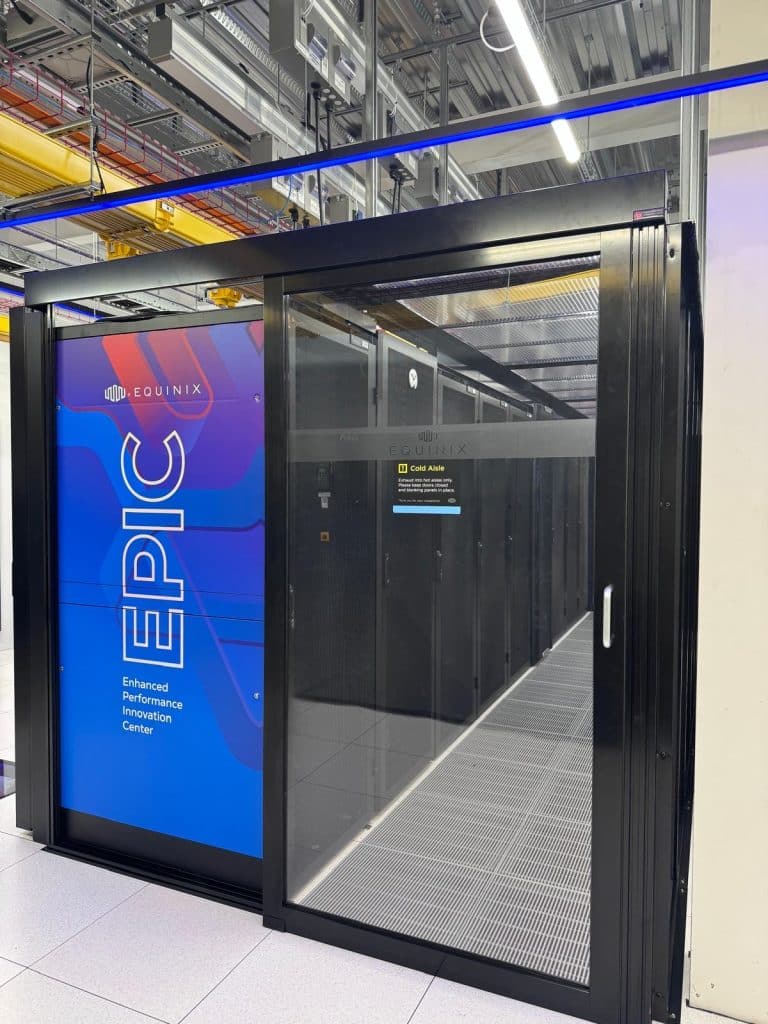
TL:DR
- Equinix Enhanced Performance Innovation Centers (EPIC) are live in London, Paris, Frankfurt, Osaka and Sydney, with more sites planned for 2027.
- Each center is a production-ready liquid cooling environment inside an active Equinix IBX data center, where enterprises test liquid-cooled GPU and CPU platforms with Equinix engineers and OEM partners before they scale.
- The photos and video below show what that looks like in practice: the coolant distribution units, manifolds and racks that high-density AI workloads now depend on.
A rack of current-generation GPUs can draw more than 200 kW. Most data centers built a few years ago were designed around 5 to 10 kW per rack. Closing that gap is why liquid cooling has moved from a specialist topic to a standard line in enterprise AI plans, and it is also why so many infrastructure teams want to watch it run before they commit capital to it.
That is the job of EPIC. The Equinix Enhanced Performance Innovation Centers, announced today, are liquid cooling environments inside live Equinix IBX data centers in London (LD5), Paris (PA10), Frankfurt (FR6), Osaka (OS3) and Sydney (SY5). Enterprises can bring in the latest liquid-cooled GPU and CPU platforms from our OEM partners, run training and inference workloads under production conditions and work through the operational questions with Equinix engineers before a full deployment. The product release note on Equinix Community has site-by-site details. Below is a look at what you would see on a visit.
Watch: EPIC liquid cooling in action
A short walk through an EPIC environment with the Equinix team, from the coolant distribution unit to the rack.
Check out these photos from inside EPIC
The photos below were taken at FR6, LD5, OS3, PA10 and SY5. Each caption notes the location.
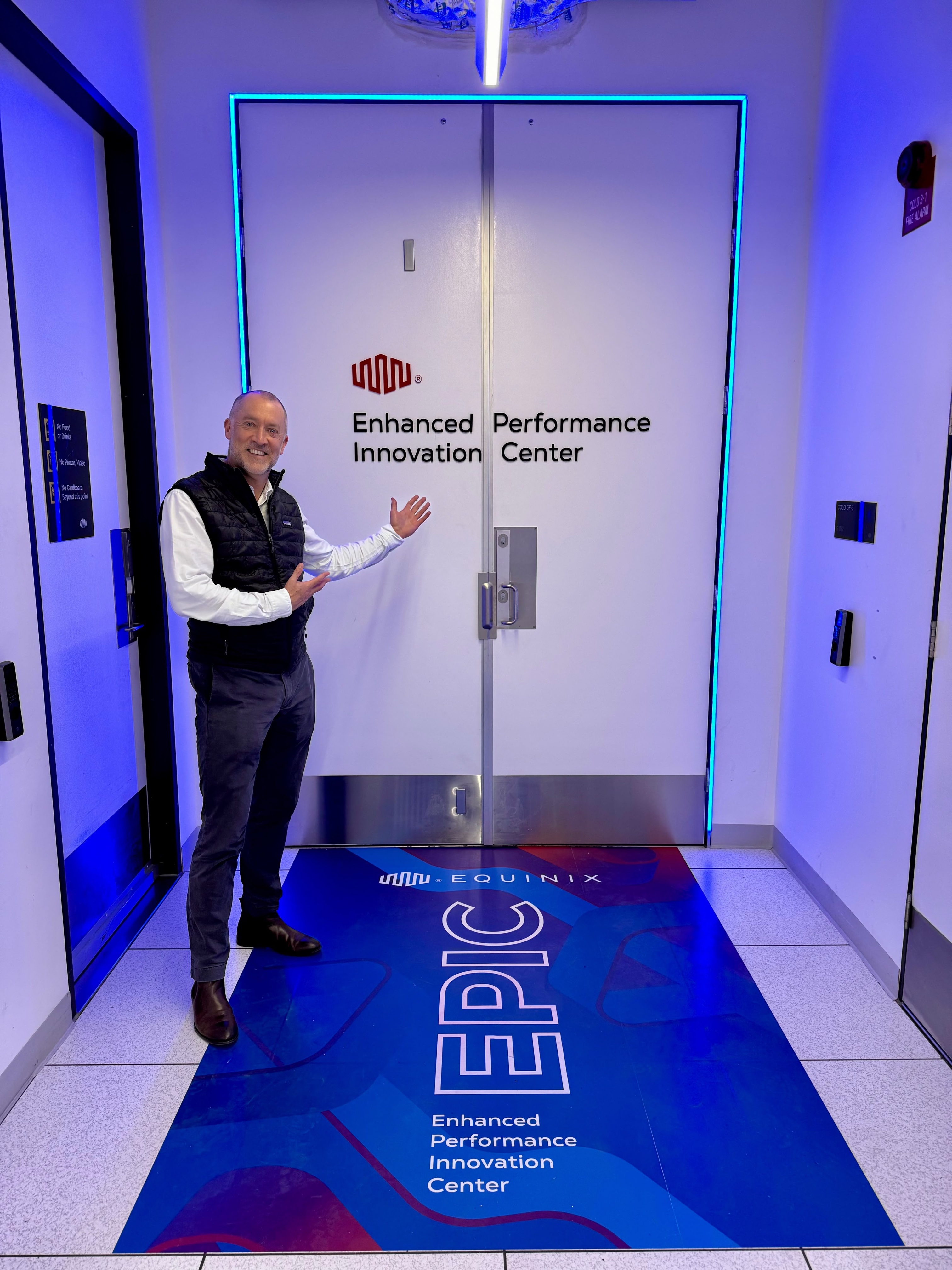 Jarrod Nink, Managing Director, Australia, at SY5
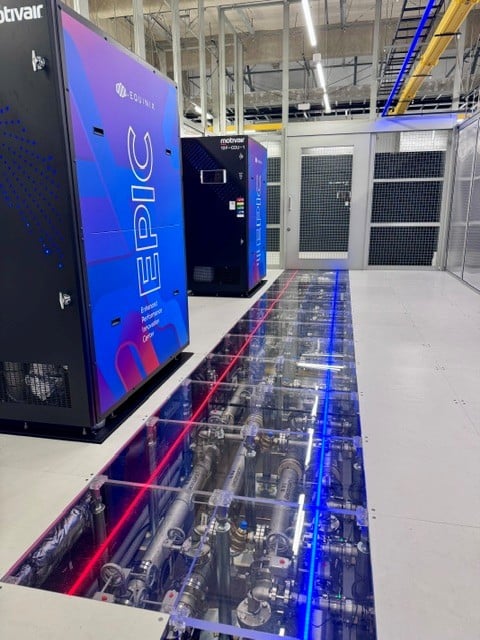 Chilled water loop lighting and CDU branding at OS3
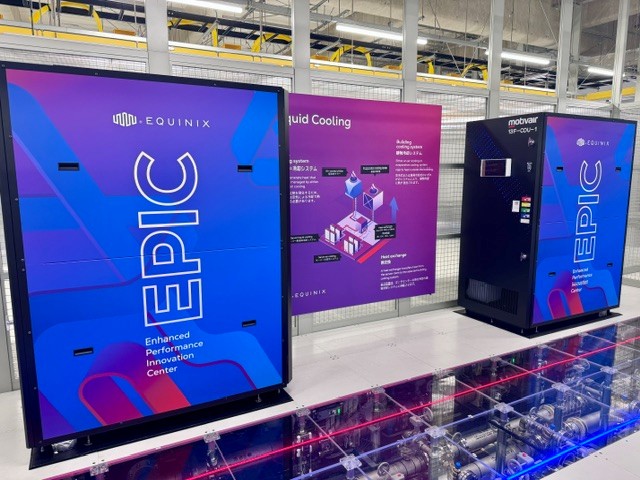 OS3
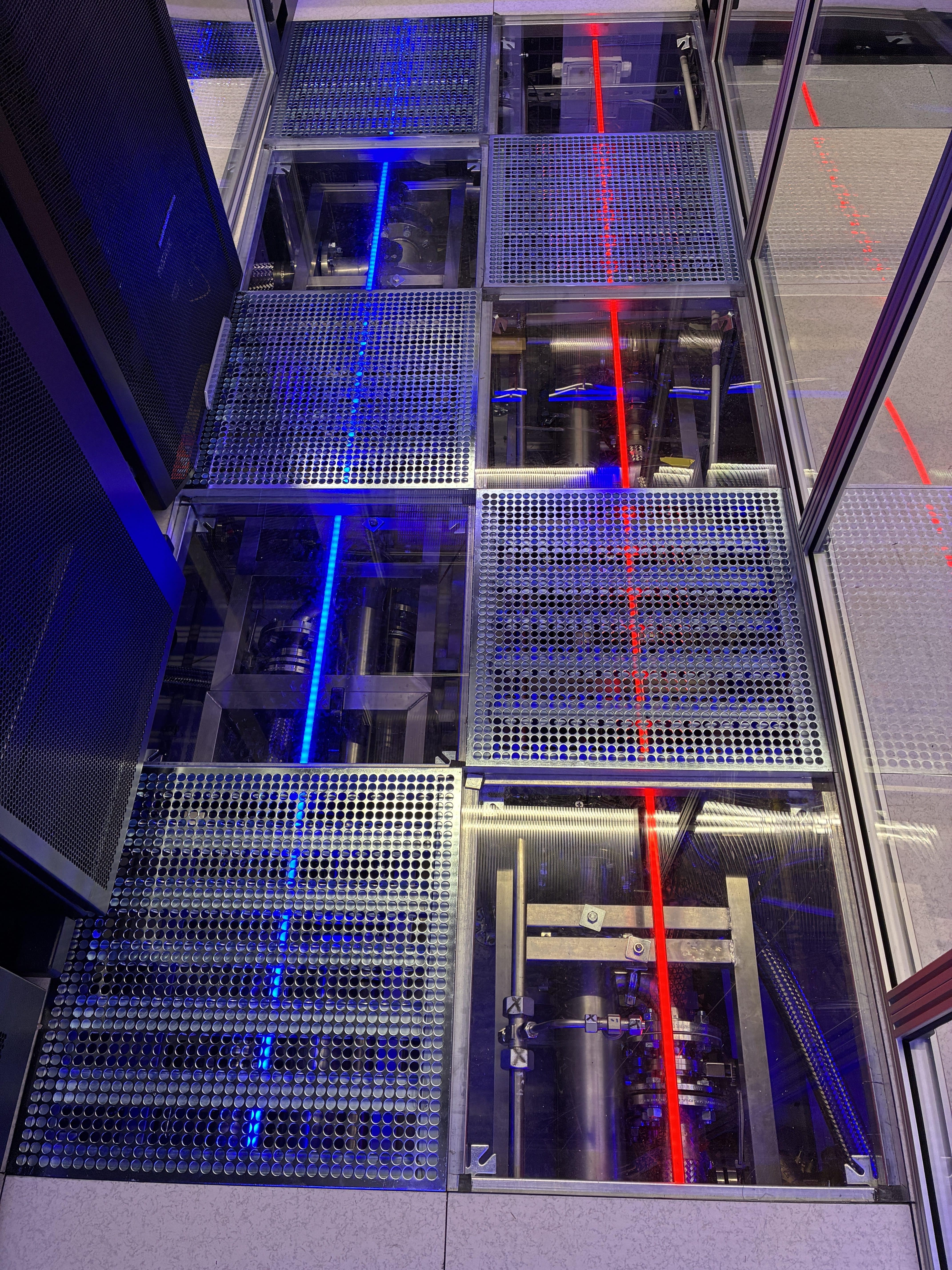 Chilled water loop lighting at FR6
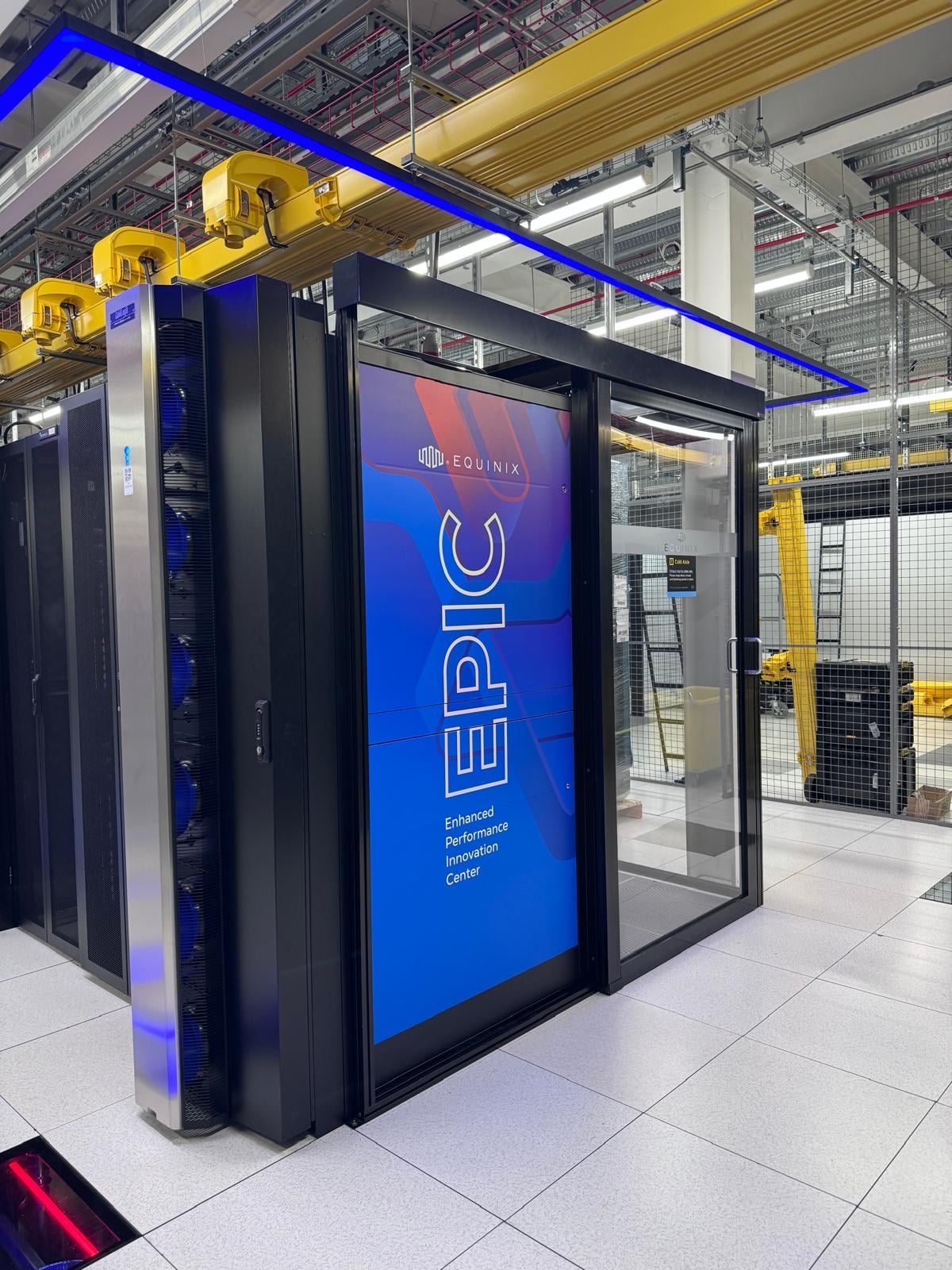 Liquid cooling space halo lighting at LD5
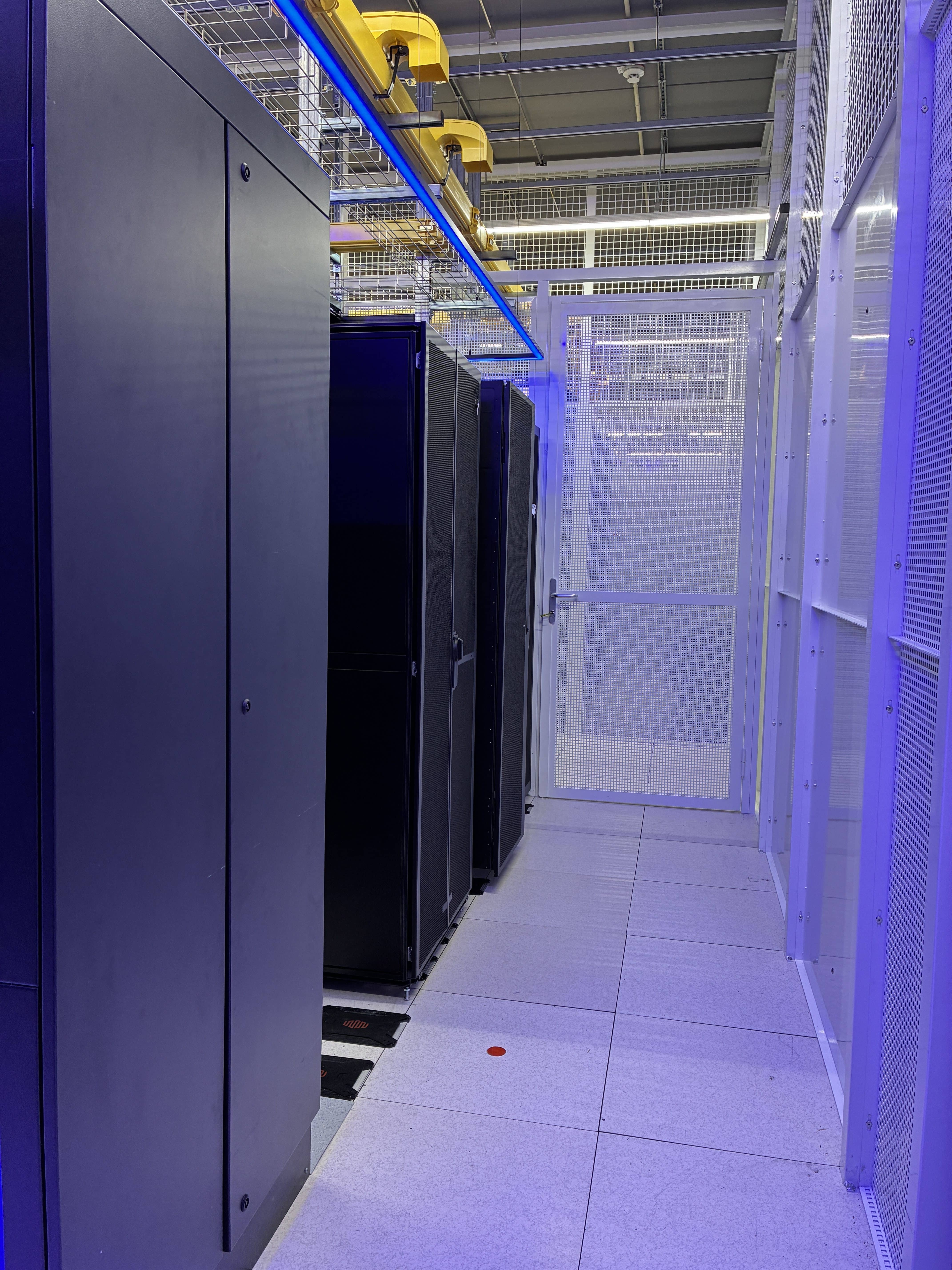 FR6
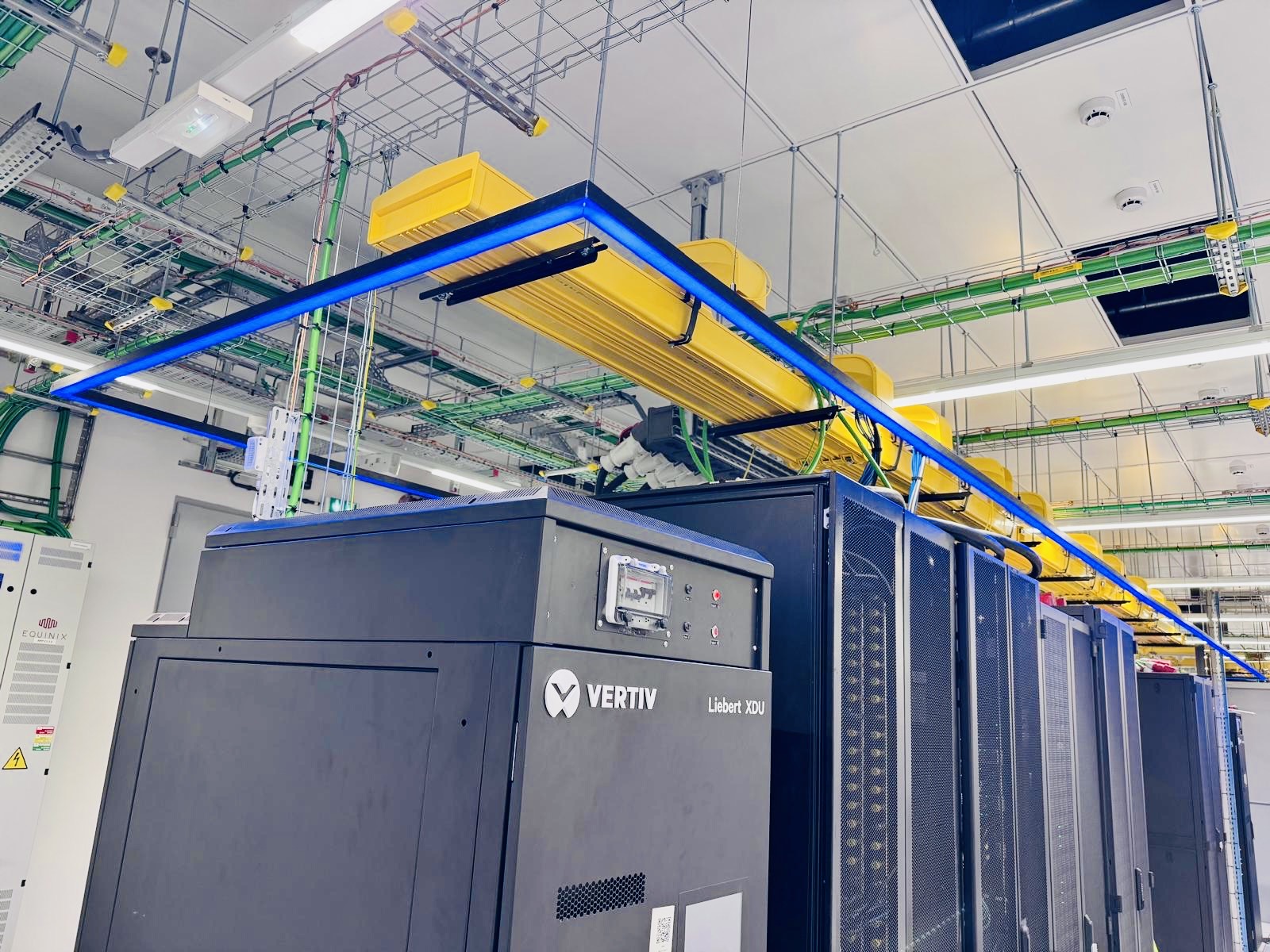 CDU and adjacent racks with the lighting around the top demarcating EPIC space at PA10
What you are looking at: the parts of a liquid cooling system
Every EPIC site runs on the same basic anatomy. A primary loop carries heat from the coolant distribution unit (CDU) out to the building’s chillers. A secondary loop carries coolant from the CDU to the racks, where manifolds and flexible hoses deliver it to each server through quick-disconnect couplings. Sensors track temperature, flow and pressure along the way, and leak detection with automatic shutoff valves sits underneath all of it. Lindsay Schulz and Sebastien Ye walk through each component in The Anatomy of a Direct-to-Chip Liquid Cooling System.
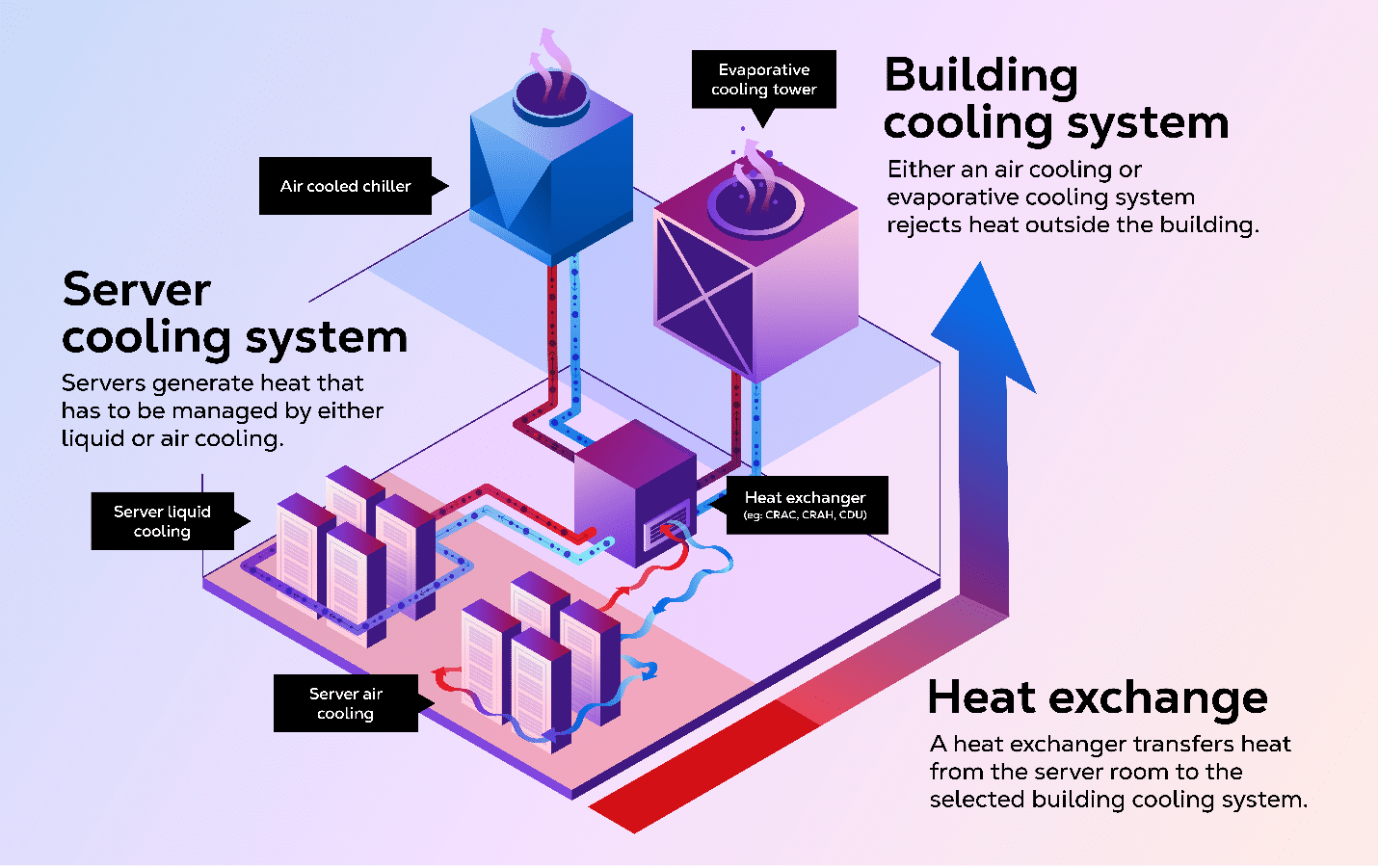
How heat moves from the server, through the heat exchanger, to the building cooling system. Diagram from How to Speak Like a Data Center Geek: Cooling.
Why test first: Criteo’s answer
Criteo, the ad-tech company, runs AI across a distributed footprint and needed liquid cooling to perform the same way at every site. “Liquid cooling was new territory for us, so we built our confidence step by step,” said Matthieu Blumberg, SVP of Engineering Infrastructure, Security, Internal IT & CISO at Criteo. “We saw how liquid cooling performed in practice, learned what it took to run it well, and then committed to scale.” That sequence, see it, run it, then scale it, is what EPIC is built for.
Want to see EPIC in person?
Visit the EPIC program page to find the nearest site and request a visit, or contact your Equinix account team to arrange a session with the engineers in these photos.

 Subscribe to the Equinix Blog